The Slip Skirt: Styling Fashion's Most Versatile Bias Cut
The slip skirt earned permanent-collection status by solving a styling equation: the bias-cut fluidity pairs with EVERYTHING structured — the chunky knit, the tee, the blazer, the leather. Fashion’s most versatile skirt, styled through its registers.

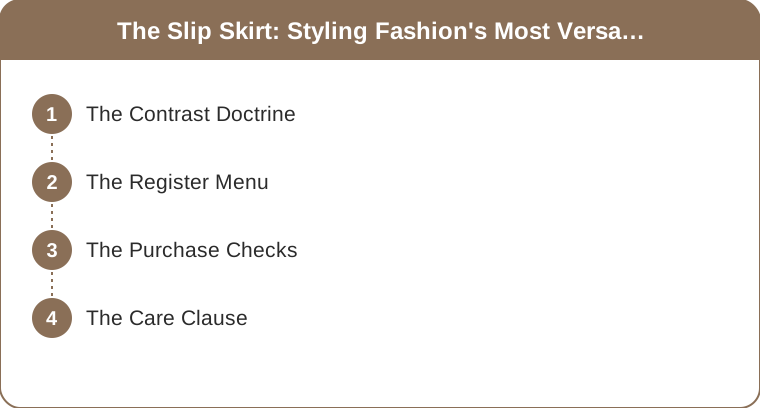
The Contrast Doctrine
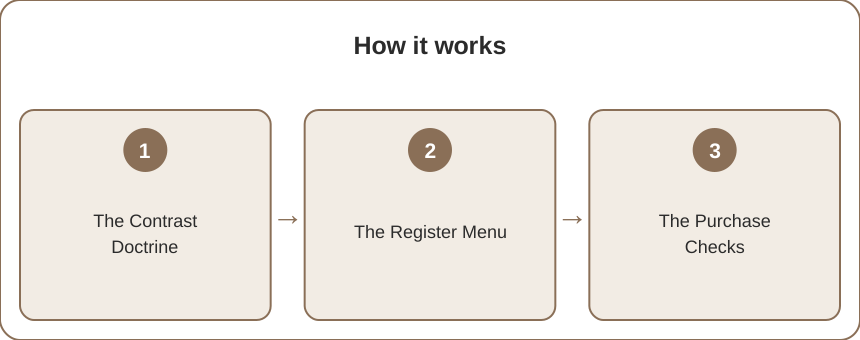
The slip skirt’s styling engine: texture opposition (the fluid satin against the matte knit — the texture-mixing masterclass in one outfit) — the skirt supplies the polish; the top supplies the ballast. The all-fluid pairing (slip with silk) reads nightwear; the contrast reads editorial.
The Register Menu
The skirt’s occasions by pairing: the chunky-knit-and-sneaker weekend, the tee-and-sandal summer default, the blazer-and-heel office register (the slip goes professional under structure), and the evening slip with the strappy heel (its birth register — one skirt spanning four dress codes on pairing alone).

The Purchase Checks
The bias-cut exam: the lining question (unlined satin narrates everything beneath — the slip’s slip is often required), the daylight opacity audit (the LWD protocols apply to pale slips), the length by the hemline map (midi-length slips obey the calf-crossing rules), and the waistband style (the flat elastic wins comfort; the side-zip wins polish under tucks).
The Care Clause
The satin keeping: cold gentle wash or hand-wash (the care-label hieroglyphics matter here), hang-dry away from sun, the cool iron on reverse or the steam preferred, and the snag economy (the slip travels away from velcro and rough totes). Kept well, the slip skirt outlasts trends it precedes and follows — the bias cut was always a keeper’s investment.
Fluid against structure, four registers by pairing, opacity audited, satin steamed. The slip skirt solved skirt styling years ago — the doctrine just names the contrast doing the work.
Keep Reading
This article is for general styling and informational purposes only. Trends, sizing, availability and pricing may vary by brand and season.